Artist talk at the Asian Art Museum
Art rooted in sincerity, not technique
Yosemite-inspired works debut in exhibition
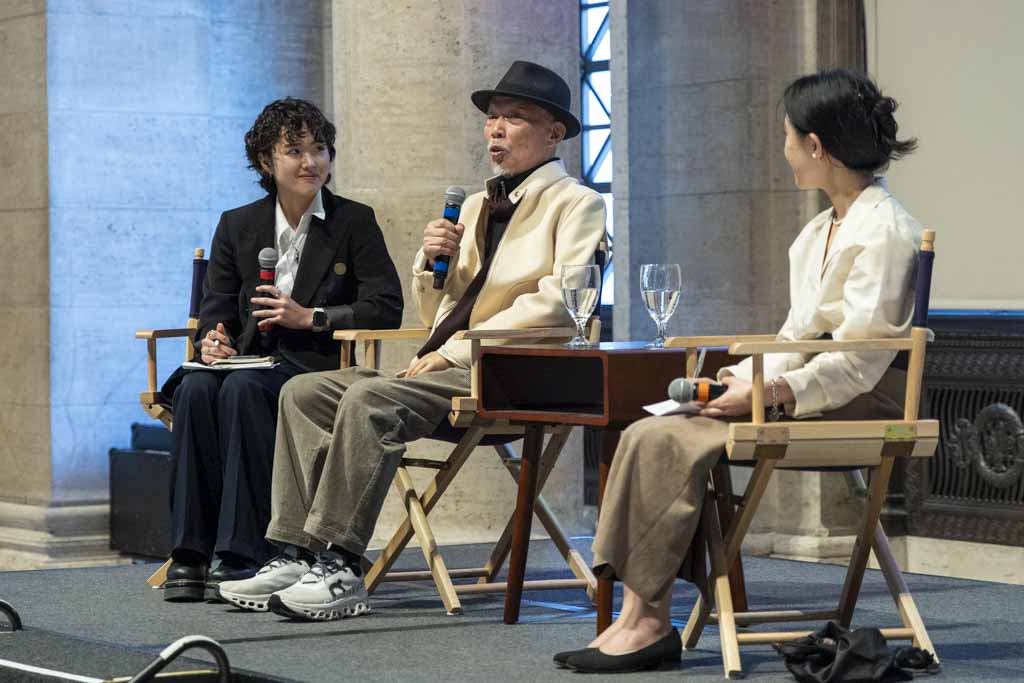
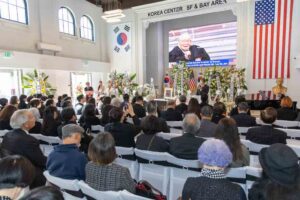
At the San Francisco Asian Art Museum, where a major exhibition by Korean ink painting master Dae-sung Park is currently on view, the museum hosted a special “Artist Talk” on the 29th that offered audiences a rare opportunity to explore the inner world behind the artist’s work.
The conversation drew more than 200 attendees, including members of the Korean community and local art enthusiasts. More than a typical exhibition-related program, the event served as a reflective moment to understand the philosophical and personal foundations that have shaped Park’s artistic life.
The central theme of the conversation was authenticity. When asked why his work resonates with audiences around the world beyond Korea, Park pointed not to technique, style, or subject matter but to attitude and time. Prefacing his answer with humility, he said he felt somewhat embarrassed to say it himself, but believed that the sincerity he has cultivated over a lifetime is embedded in his paintings.
Park explained that his work has never been driven by fame, career advancement, or financial success. Instead, he has devoted himself entirely to the act of painting. The accumulated years of dedication, he said, remain within the surface of each work, allowing the paintings to communicate across cultural and linguistic boundaries.
His remarks underscored a view of art as a process rather than a result. A finished work, he suggested, is not the product of strategic planning or market considerations but the residue of concentration and immersion. The act of clearing away other ambitions and confronting the canvas with full attention ultimately creates the emotional resonance within a painting. Park encouraged viewers to approach art not through formal analysis alone but through an emotional connection, suggesting that understanding the artist’s mindset opens the work more deeply to the viewer.
The conversation drew more than 200 attendees, including members of the Korean community and local art enthusiasts. More than a typical exhibition-related program, the event served as a reflective moment to understand the philosophical and personal foundations that have shaped Park’s artistic life.
The central theme of the conversation was authenticity. When asked why his work resonates with audiences around the world beyond Korea, Park pointed not to technique, style, or subject matter but to attitude and time. Prefacing his answer with humility, he said he felt somewhat embarrassed to say it himself, but believed that the sincerity he has cultivated over a lifetime is embedded in his paintings.
Park explained that his work has never been driven by fame, career advancement, or financial success. Instead, he has devoted himself entirely to the act of painting. The accumulated years of dedication, he said, remain within the surface of each work, allowing the paintings to communicate across cultural and linguistic boundaries.
His remarks underscored a view of art as a process rather than a result. A finished work, he suggested, is not the product of strategic planning or market considerations but the residue of concentration and immersion. The act of clearing away other ambitions and confronting the canvas with full attention ultimately creates the emotional resonance within a painting. Park encouraged viewers to approach art not through formal analysis alone but through an emotional connection, suggesting that understanding the artist’s mindset opens the work more deeply to the viewer.
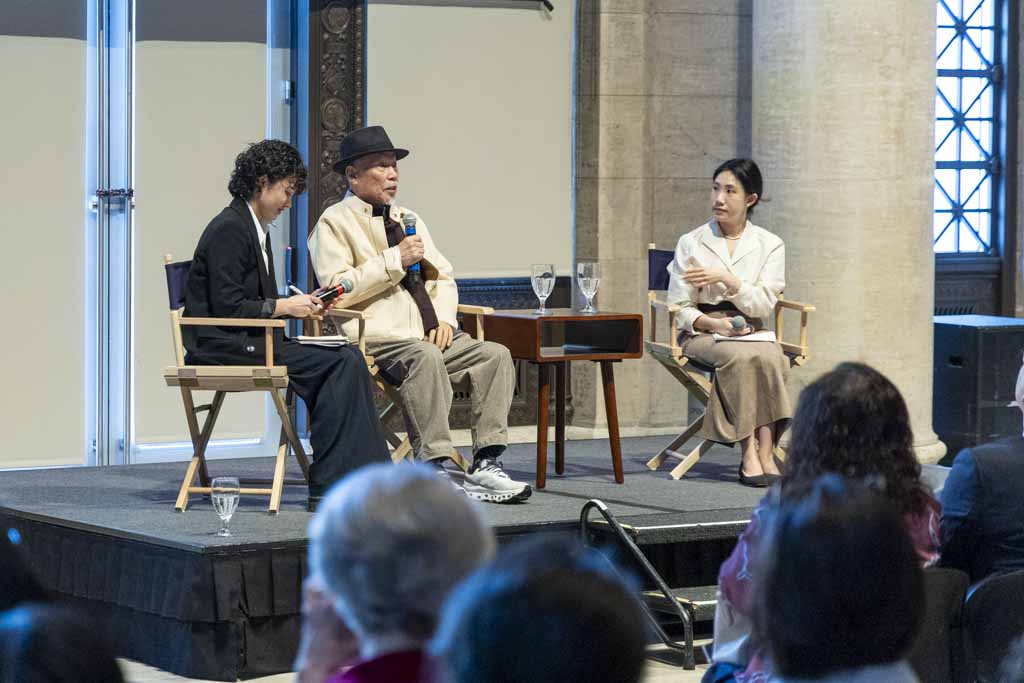
His reflections on ink and brush painting further reinforced this philosophy. Ink painting, he explained, leaves little room for correction or erasure. Each brushstroke carries the artist’s breath, rhythm, and mental state. As a result, ink painting belongs as much to the realm of discipline and cultivation as it does to technical skill. It requires long periods of repetition and practice, built slowly over time.
In contrast to contemporary visual culture, which often emphasizes speed and immediate results, Park emphasized slowness, accumulation, restraint, and focus as essential conditions of art. The brush line in ink painting, he said, is not merely a formal element but a record of the artist’s inner spirit.
Park’s artistic philosophy is closely tied to his personal life story. As a child, he lost his left arm in an accident. Spending long periods at home while avoiding the gaze of others, he began to immerse himself in drawing and painting. Without formal academic training or the mentorship of a particular master, he developed his practice through self-directed study, learning from classical ink paintings, ancient texts, and direct observation of nature.
This unconventional path eventually shaped the independence and distinctive visual language of his work. In the 1970s, Park gained recognition in Korea’s art world, receiving eight consecutive selections at the prestigious National Art Exhibition of Korea and later winning the grand prize at the Central Art Exhibition. He has since been recognized as a leading figure in modern Korean landscape painting, carrying forward the tradition of “true-view landscape painting” while expanding it through contemporary spatial composition and bold brushwork.
In contrast to contemporary visual culture, which often emphasizes speed and immediate results, Park emphasized slowness, accumulation, restraint, and focus as essential conditions of art. The brush line in ink painting, he said, is not merely a formal element but a record of the artist’s inner spirit.
Park’s artistic philosophy is closely tied to his personal life story. As a child, he lost his left arm in an accident. Spending long periods at home while avoiding the gaze of others, he began to immerse himself in drawing and painting. Without formal academic training or the mentorship of a particular master, he developed his practice through self-directed study, learning from classical ink paintings, ancient texts, and direct observation of nature.
This unconventional path eventually shaped the independence and distinctive visual language of his work. In the 1970s, Park gained recognition in Korea’s art world, receiving eight consecutive selections at the prestigious National Art Exhibition of Korea and later winning the grand prize at the Central Art Exhibition. He has since been recognized as a leading figure in modern Korean landscape painting, carrying forward the tradition of “true-view landscape painting” while expanding it through contemporary spatial composition and bold brushwork.
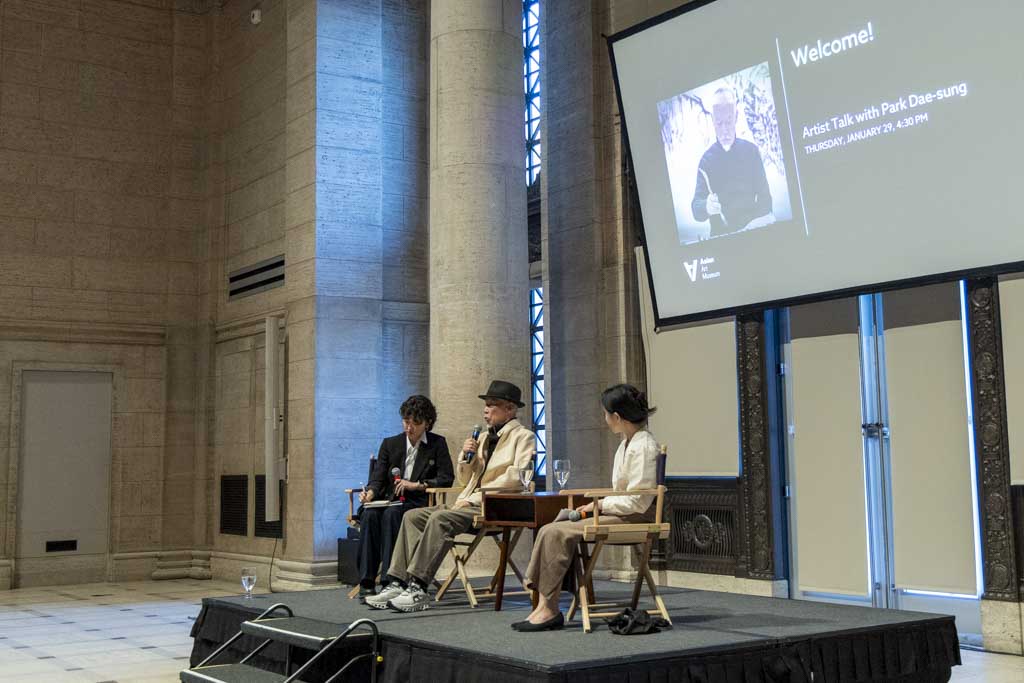
Calligraphy has also played a central role in his artistic development. Park noted that his deep study of calligraphy strengthened his brush control, compositional rhythm, and sense of movement within the picture plane.
When asked about the global rise of Korean culture through popular music and film, Park emphasized that true artistic universality does not come from trends but from essence. The most authentic work, rooted deeply in one’s own cultural and personal foundation, ultimately communicates with the world. He added that this belief is why he has rarely altered his artistic principles while working internationally.
Park also shared his perspective on the rapid technological changes of the modern era, including the rise of artificial intelligence. In a time dominated by efficiency and speed, he said, art should instead serve as a space that restores human breath, time, and concentration. He encouraged younger artists to move beyond result-oriented thinking and focus on discipline, patience, and self-refinement. For Park, art is not merely a profession but a lifelong path of cultivation.
One story that left a strong impression on audiences involved an incident at the Solgeo Art Museum in Gyeongju, where a young child accidentally damaged one of his works. Despite the artwork’s significant value, Park chose to forgive the incident, explaining that he did not want the child to leave the museum with a painful memory. During the talk, he repeated that children are still in the process of growing and should not simply be judged by mistakes. For Park, the experience of encountering art mattered more than punishment or responsibility.
This perspective reflects his broader view that artworks should not be treated merely as objects of ownership or monetary value but as living expressions shaped by time, experience, and relationships.
Today, Park’s works are held in major collections, including the National Museum of Modern and Contemporary Art in Korea, as well as institutions and museums in the United States such as the Asian Art Museum in San Francisco. Yet the discussion revealed that the essence of his art lies less in institutional recognition and more in the underlying spirit of his practice. Park repeatedly emphasized that the power of a painting emerges not from technique but from attitude, and not from form but from sincerity.
When asked about the global rise of Korean culture through popular music and film, Park emphasized that true artistic universality does not come from trends but from essence. The most authentic work, rooted deeply in one’s own cultural and personal foundation, ultimately communicates with the world. He added that this belief is why he has rarely altered his artistic principles while working internationally.
Park also shared his perspective on the rapid technological changes of the modern era, including the rise of artificial intelligence. In a time dominated by efficiency and speed, he said, art should instead serve as a space that restores human breath, time, and concentration. He encouraged younger artists to move beyond result-oriented thinking and focus on discipline, patience, and self-refinement. For Park, art is not merely a profession but a lifelong path of cultivation.
One story that left a strong impression on audiences involved an incident at the Solgeo Art Museum in Gyeongju, where a young child accidentally damaged one of his works. Despite the artwork’s significant value, Park chose to forgive the incident, explaining that he did not want the child to leave the museum with a painful memory. During the talk, he repeated that children are still in the process of growing and should not simply be judged by mistakes. For Park, the experience of encountering art mattered more than punishment or responsibility.
This perspective reflects his broader view that artworks should not be treated merely as objects of ownership or monetary value but as living expressions shaped by time, experience, and relationships.
Today, Park’s works are held in major collections, including the National Museum of Modern and Contemporary Art in Korea, as well as institutions and museums in the United States such as the Asian Art Museum in San Francisco. Yet the discussion revealed that the essence of his art lies less in institutional recognition and more in the underlying spirit of his practice. Park repeatedly emphasized that the power of a painting emerges not from technique but from attitude, and not from form but from sincerity.
The conversation ultimately served not only as an introduction to the world of Dae-sung Park but also as a broader reflection on what gives contemporary art its lasting power. His works resonate internationally not because of the exotic appeal of Korean imagery but because decades of immersion, discipline, and unwavering sincerity have been translated into the structure and rhythm of his paintings.
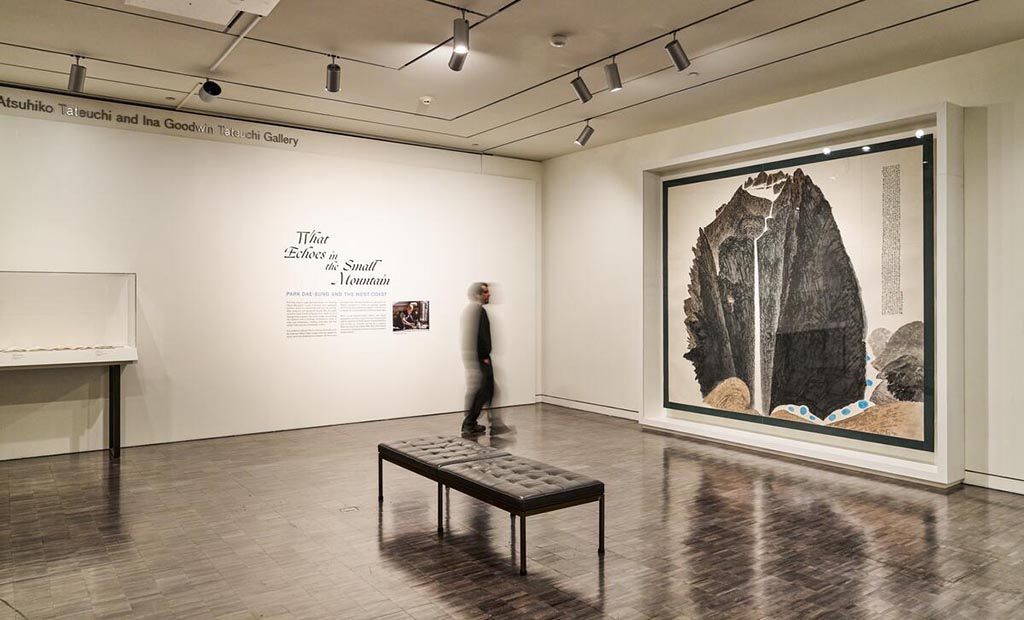
Meanwhile, Park’s exhibition, titled “Echoes in the Small Mountain: Park Dae-sung and the West Coast,” has been on view at the San Francisco Asian Art Museum since December 11 of last year and will run through July 13. The exhibition highlights the artist’s reinterpretation of traditional Korean ink painting through a contemporary lens.
Among the highlights are previously unseen works inspired by the dramatic landscapes of Yosemite. The paintings mark the first time Park has fully depicted a landscape outside of Korea. The exhibition also introduces a new series based on California’s natural scenery, expanding the geographical scope of his work.
In addition, three monumental paintings donated to the museum’s collection roughly 20 years ago are being displayed together for the first time, drawing significant attention from visitors.
Rather than recreating landscapes with photographic realism, Park’s work focuses on translating the emotional and spiritual impact of encountering nature. Through dynamic brushwork and experimental compositions, he visually expresses the powerful resonance that vast landscapes evoke.
In one of his well-known depictions of Mount Geumgang in Korea, for example, the many peaks of the mountain range are compressed into what appears as a single massive rock formation, creating an overwhelming visual presence. Curator Yoon-jee Choi described this approach as a “panoramic image of the mind.”
Park, who is also known by his artistic name “Sosan,” meaning “Small Mountain,” a name given by his grandfather, has spent decades traveling across Korea to sketch its famous mountains and landscapes on site before transforming them into finished works.
The exhibition’s Yosemite (2025) represents the first extension of this field-based practice beyond Korea, marking a new chapter in Park’s exploration of nature and landscape.
Meanwhile, Park’s exhibition, titled “Echoes in the Small Mountain: Park Dae-sung and the West Coast,” has been on view at the San Francisco Asian Art Museum since December 11 of last year and will run through July 13. The exhibition highlights the artist’s reinterpretation of traditional Korean ink painting through a contemporary lens.
Among the highlights are previously unseen works inspired by the dramatic landscapes of Yosemite. The paintings mark the first time Park has fully depicted a landscape outside of Korea. The exhibition also introduces a new series based on California’s natural scenery, expanding the geographical scope of his work.
In addition, three monumental paintings donated to the museum’s collection roughly 20 years ago are being displayed together for the first time, drawing significant attention from visitors.
Rather than recreating landscapes with photographic realism, Park’s work focuses on translating the emotional and spiritual impact of encountering nature. Through dynamic brushwork and experimental compositions, he visually expresses the powerful resonance that vast landscapes evoke.
In one of his well-known depictions of Mount Geumgang in Korea, for example, the many peaks of the mountain range are compressed into what appears as a single massive rock formation, creating an overwhelming visual presence. Curator Yoon-jee Choi described this approach as a “panoramic image of the mind.”
Park, who is also known by his artistic name “Sosan,” meaning “Small Mountain,” a name given by his grandfather, has spent decades traveling across Korea to sketch its famous mountains and landscapes on site before transforming them into finished works.
The exhibition’s Yosemite (2025) represents the first extension of this field-based practice beyond Korea, marking a new chapter in Park’s exploration of nature and landscape.
Jeonghyun Choi / choi@baynewslab.com
Copyright © SF Bay News Lab, All Rights Reserved / Advertising Inquiry ad@baynewslab.com