Enrollment Nears 70 as Programs Expand
Sacramento Korean School launches 2026 spring semester with renewed momentum
The Sacramento Korean School has launched its 2026 spring semester, marking what community members describe as a new chapter for Korean language and cultural education in the region.
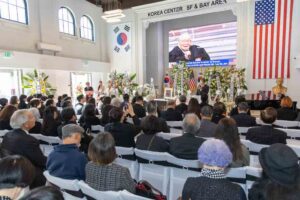
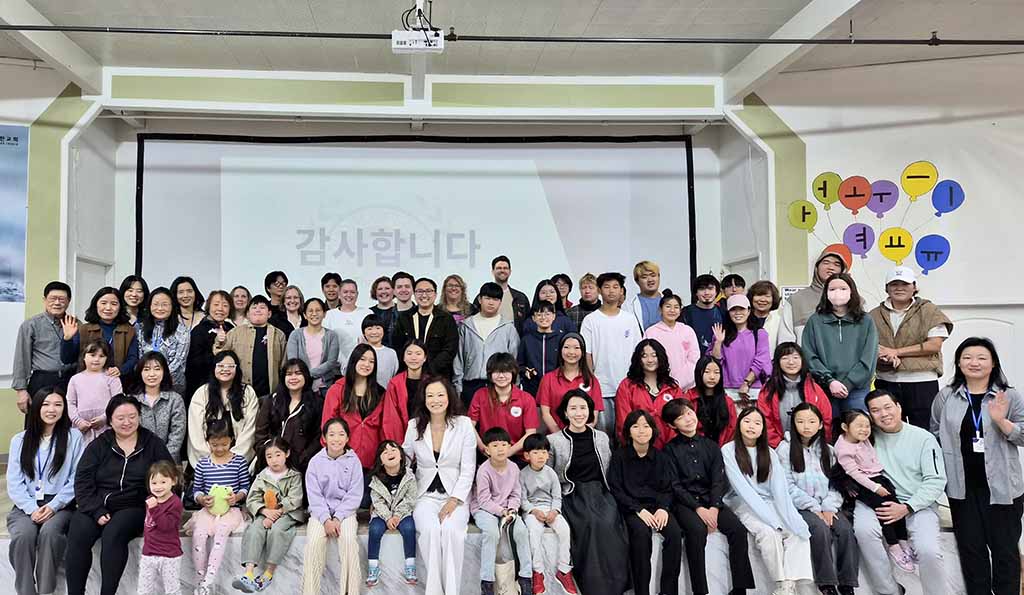
At an opening ceremony held March 7 in the school auditorium, students, parents and teachers gathered to celebrate the start of the semester and share the school’s vision and academic plans for the coming months. The event highlighted the school’s renewed stability following a period of controversy and transition.
Nearly 70 students have enrolled for the spring term, a number school leaders say reflects growing community support and confidence in the institution’s direction.
One of the most notable changes this semester is the introduction of new after-school programs designed to broaden students’ learning opportunities. In addition to regular language classes, the school is offering programs such as beginner and intermediate samulnori (traditional Korean percussion), a gifted education class, a science club and a book club.
The science club and book club are being organized by the school’s junior volunteer group and will be offered free of charge. Organizers say the programs aim to encourage students to learn through community engagement while fostering a sense of volunteerism and shared responsibility.
The school has also expanded its academic offerings. Classes are now available across multiple levels and age groups, including kindergarten, beginner, intermediate, advanced and adult programs.
Two new classes for adult learners — beginner and intermediate Korean for foreign students — have been added this semester. School leaders say the new courses are designed to make Korean language education more accessible for non-Korean learners and adults interested in studying the language in a structured environment.
To accommodate students who cannot attend in person, the school is also offering online learning options alongside its in-person classes, allowing greater flexibility and access for the broader community.
Founded in the 1980s by Korean American community members determined to preserve Korean language and culture among younger generations, the Sacramento Korean School remains one of the few Korean heritage schools in the United States with its own dedicated school building.
After reopening last year following organizational challenges, the school has spent the past year rebuilding its programs and strengthening ties with families and community supporters.
Principal Ji-yoon Park said the school’s mission goes beyond language instruction.
“The Sacramento Korean School is not just a place to learn a language,” Park said during the ceremony. “It is an educational community where students experience Korean history and culture while connecting generations. We hope second- and third-generation students will build pride in their heritage here, and that non-Korean students will find a meaningful gateway to understanding Korean culture.”
Mary Seo, vice chair of the school’s board, encouraged students to embrace the learning process.
“It’s okay to make mistakes, and it’s okay to learn slowly,” Seo said. “What matters most is continuing to challenge yourself and not giving up. I hope you enjoy learning with your teachers and friends and make this spring semester a time you will remember for years.”
The school’s faculty includes vice principal and advanced-level instructor Hye-jeong Bae, along with teachers Michelle Lee, Ji-suduck, Chang-mi Jung, Eun-hee Shim, Hee-jin Park, Min-kyung Kim, Ju-young Seo and samulnori instructor Seung-ik Lee.
School officials say they plan to continue expanding programs and strengthening their role as a nonprofit educational institution serving the community. With growing enrollment and new initiatives underway, the Sacramento Korean School hopes to establish itself as a leading regional hub for Korean language and cultural education.
The Sacramento Korean School has launched its 2026 spring semester, marking what community members describe as a new chapter for Korean language and cultural education in the region.
At an opening ceremony held March 7 in the school auditorium, students, parents and teachers gathered to celebrate the start of the semester and share the school’s vision and academic plans for the coming months. The event highlighted the school’s renewed stability following a period of controversy and transition.
Nearly 70 students have enrolled for the spring term, a number school leaders say reflects growing community support and confidence in the institution’s direction.
One of the most notable changes this semester is the introduction of new after-school programs designed to broaden students’ learning opportunities. In addition to regular language classes, the school is offering programs such as beginner and intermediate samulnori (traditional Korean percussion), a gifted education class, a science club and a book club.
The science club and book club are being organized by the school’s junior volunteer group and will be offered free of charge. Organizers say the programs aim to encourage students to learn through community engagement while fostering a sense of volunteerism and shared responsibility.
The school has also expanded its academic offerings. Classes are now available across multiple levels and age groups, including kindergarten, beginner, intermediate, advanced and adult programs.
Two new classes for adult learners — beginner and intermediate Korean for foreign students — have been added this semester. School leaders say the new courses are designed to make Korean language education more accessible for non-Korean learners and adults interested in studying the language in a structured environment.
To accommodate students who cannot attend in person, the school is also offering online learning options alongside its in-person classes, allowing greater flexibility and access for the broader community.
Founded in the 1980s by Korean American community members determined to preserve Korean language and culture among younger generations, the Sacramento Korean School remains one of the few Korean heritage schools in the United States with its own dedicated school building.
After reopening last year following organizational challenges, the school has spent the past year rebuilding its programs and strengthening ties with families and community supporters.
Principal Ji-yoon Park said the school’s mission goes beyond language instruction.
“The Sacramento Korean School is not just a place to learn a language,” Park said during the ceremony. “It is an educational community where students experience Korean history and culture while connecting generations. We hope second- and third-generation students will build pride in their heritage here, and that non-Korean students will find a meaningful gateway to understanding Korean culture.”
Mary Seo, vice chair of the school’s board, encouraged students to embrace the learning process.
“It’s okay to make mistakes, and it’s okay to learn slowly,” Seo said. “What matters most is continuing to challenge yourself and not giving up. I hope you enjoy learning with your teachers and friends and make this spring semester a time you will remember for years.”
The school’s faculty includes vice principal and advanced-level instructor Hye-jeong Bae, along with teachers Michelle Lee, Ji-suduck, Chang-mi Jung, Eun-hee Shim, Hee-jin Park, Min-kyung Kim, Ju-young Seo and samulnori instructor Seung-ik Lee.
School officials say they plan to continue expanding programs and strengthening their role as a nonprofit educational institution serving the community. With growing enrollment and new initiatives underway, the Sacramento Korean School hopes to establish itself as a leading regional hub for Korean language and cultural education.
Jeonghyun Choi / choi@baynewslab.com
Copyright © SF Bay News Lab, All Rights Reserved / Advertising Inquiry ad@baynewslab.com