Bay Area Koreans hold memorial
Community recalls independence legacy
Tributes highlight a life of sacrifice
San Francisco’s Korean American community gathered this week to honor the life and legacy of Ha-jeon Lee, one of the oldest surviving Korean independence activists and a revered elder of the Korean diaspora, during a memorial ceremony held at the San Francisco Korean Center.
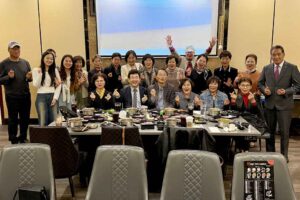
Hosted by the San Francisco & Bay Area Korea Center, the memorial drew about 200 attendees, including community leaders, family members and representatives of Korean organizations across Northern California. The ceremony reflected both mourning and deep respect for a man widely regarded as a moral pillar of the Korean American community.
Ha-jeon Lee died Feb. 4 at the age of 104.
Born during Japan’s colonial rule over Korea, Lee became involved in the independence movement as a student at Soongin Commercial School in Pyongyang. He organized a secret student group that carried out anti-Japanese activities and continued underground resistance while studying in Japan. He was eventually arrested by Japanese authorities and imprisoned for his role in the independence movement.
After Korea’s liberation, Lee immigrated to the United States and later settled in California. In Monterey, he taught Korean at the U.S. Army Language School, helping train American soldiers preparing to serve during the Korean War. Even while living abroad, Lee remained deeply committed to Korea’s future and frequently spoke about national identity, peace and reunification.
In recent decades, Lee was widely recognized as a spiritual elder within the Korean American community, regularly attending civic and cultural events and sharing firsthand accounts of Korea’s independence struggle with younger generations.
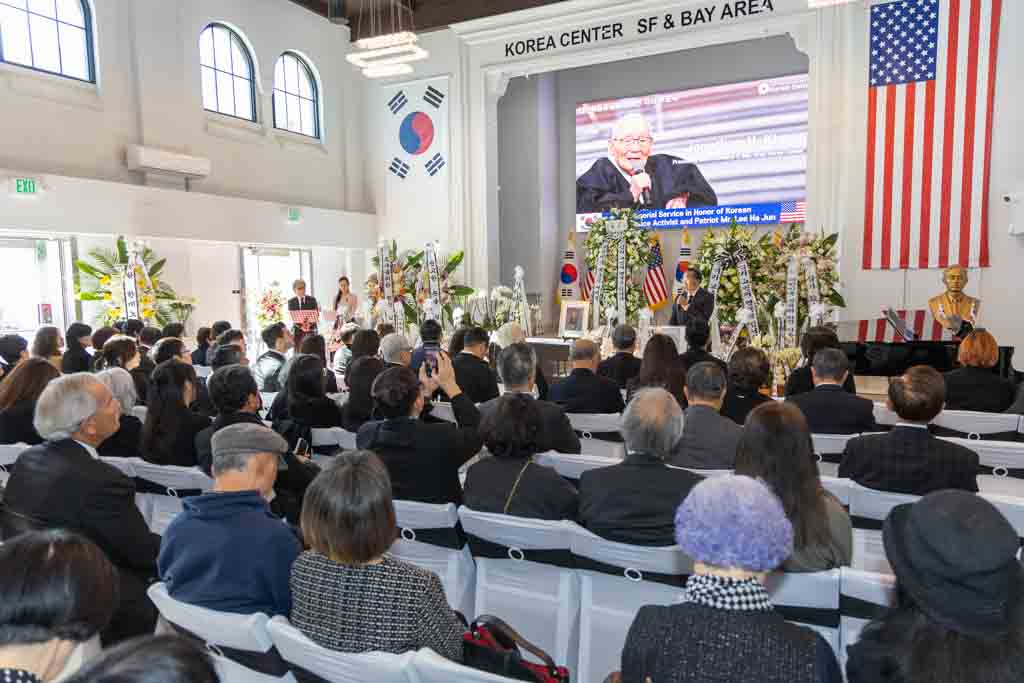
Hosted by the San Francisco & Bay Area Korea Center, the memorial drew about 200 attendees, including community leaders, family members and representatives of Korean organizations across Northern California. The ceremony reflected both mourning and deep respect for a man widely regarded as a moral pillar of the Korean American community.
Ha-jeon Lee died Feb. 4 at the age of 104.
Born during Japan’s colonial rule over Korea, Lee became involved in the independence movement as a student at Soongin Commercial School in Pyongyang. He organized a secret student group that carried out anti-Japanese activities and continued underground resistance while studying in Japan. He was eventually arrested by Japanese authorities and imprisoned for his role in the independence movement.
After Korea’s liberation, Lee immigrated to the United States and later settled in California. In Monterey, he taught Korean at the U.S. Army Language School, helping train American soldiers preparing to serve during the Korean War. Even while living abroad, Lee remained deeply committed to Korea’s future and frequently spoke about national identity, peace and reunification.
In recent decades, Lee was widely recognized as a spiritual elder within the Korean American community, regularly attending civic and cultural events and sharing firsthand accounts of Korea’s independence struggle with younger generations.
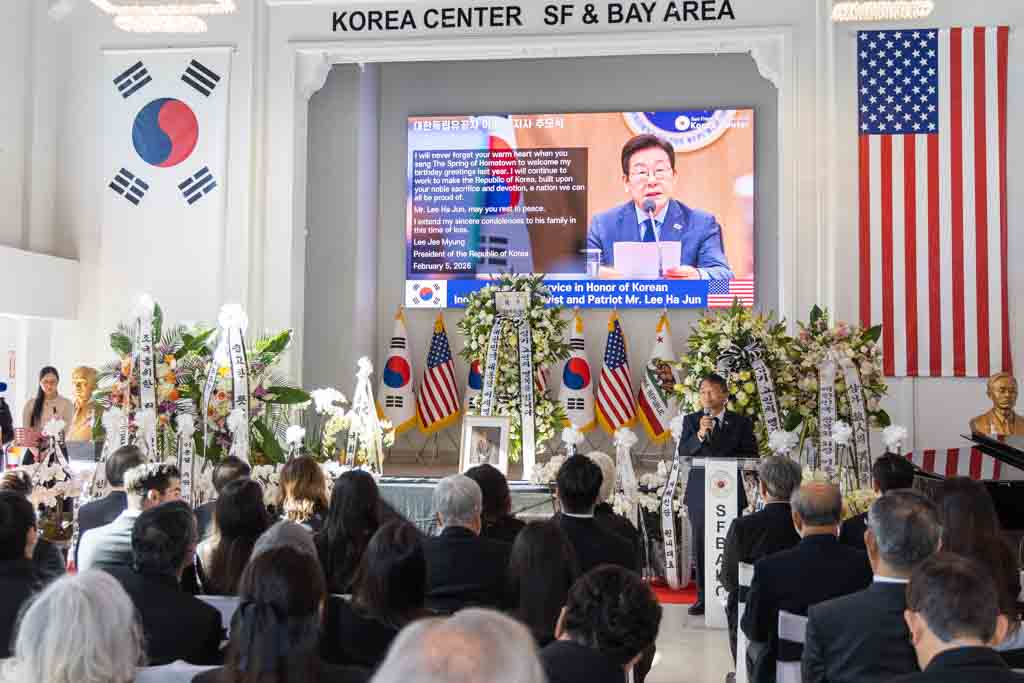
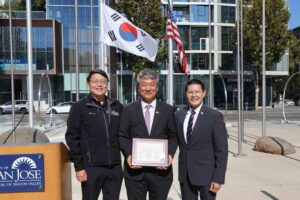
South Korean President Jae-myung Lee sent a written tribute that was read aloud at the ceremony by Jung-taek Lim, South Korea’s consul general in San Francisco. In the message, the president praised Lee’s lifelong devotion to his country and offered condolences on behalf of the Korean people.
“The life you lived — praying for the peace and reunification of your homeland even while abroad — was itself a noble act of patriotism,” the president wrote.
Additional tributes were delivered through video messages and statements from Korean political and civic leaders, including National Assembly Speaker Won-shik Woo and Minister of Patriots and Veterans Affairs Oh-eul Kwon, who honored Lee’s contributions to the independence movement and his lasting influence on Korean communities overseas.
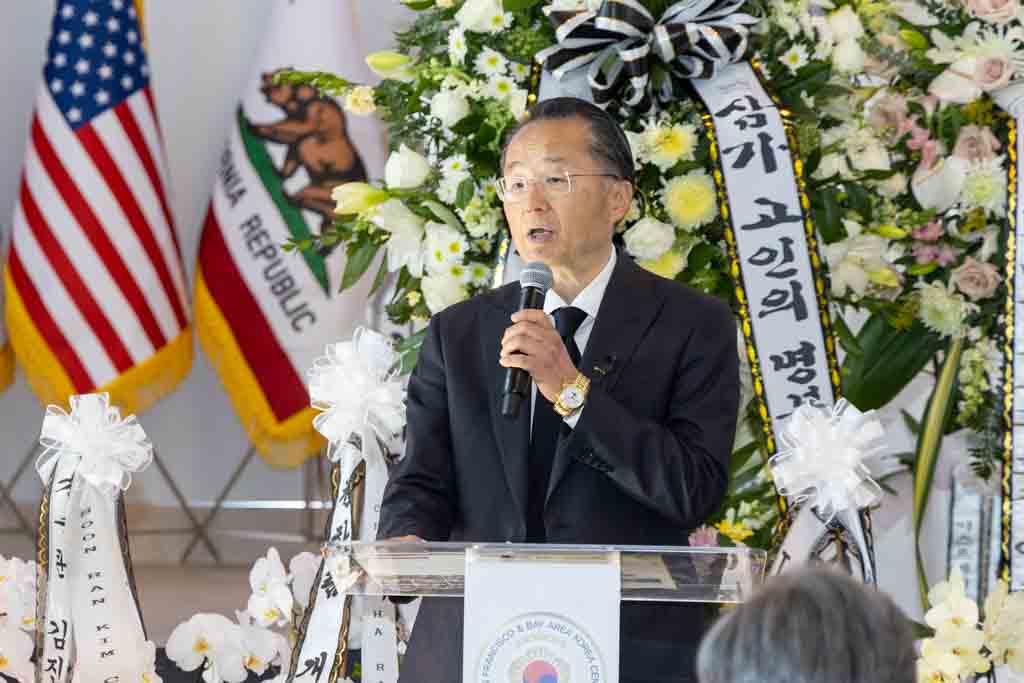
Jonathan H. Kim, president of the San Francisco & Bay Area Korea Center, delivered one of the central tributes of the ceremony, emphasizing Lee’s significance to generations of Korean Americans.
“Ha-jeon Lee was not only a respected independence activist, but also a living piece of history and a spiritual pillar of the Korean American community,” Kim said. “For decades, he stood with us at community events — from Korean Independence Day commemorations at San Francisco City Hall to gatherings that celebrated Korean culture and heritage.”
“The life you lived — praying for the peace and reunification of your homeland even while abroad — was itself a noble act of patriotism,” the president wrote.
Additional tributes were delivered through video messages and statements from Korean political and civic leaders, including National Assembly Speaker Won-shik Woo and Minister of Patriots and Veterans Affairs Oh-eul Kwon, who honored Lee’s contributions to the independence movement and his lasting influence on Korean communities overseas.
Jonathan H. Kim, president of the San Francisco & Bay Area Korea Center, delivered one of the central tributes of the ceremony, emphasizing Lee’s significance to generations of Korean Americans.
“Ha-jeon Lee was not only a respected independence activist, but also a living piece of history and a spiritual pillar of the Korean American community,” Kim said. “For decades, he stood with us at community events — from Korean Independence Day commemorations at San Francisco City Hall to gatherings that celebrated Korean culture and heritage.”
Kim said Lee played an especially important role in educating younger Korean Americans about the history of Korea’s struggle for independence.
“He spoke directly to second- and third-generation Korean Americans about the sacrifices that built our nation,” Kim said. “His life was devoted to education, community service and preserving the values of freedom and national dignity.”
Kim added that Lee’s legacy will continue to guide future generations.
“The life he lived was itself a lesson,” Kim said. “His dedication to community, to education and to the memory of the independence movement will remain an enduring legacy for Korean Americans.”
Members of Lee’s family also shared personal reflections. His grandson Austin Lee described him not only as a national hero but as a loving grandfather whose life of sacrifice shaped generations of his family.
“He spoke directly to second- and third-generation Korean Americans about the sacrifices that built our nation,” Kim said. “His life was devoted to education, community service and preserving the values of freedom and national dignity.”
Kim added that Lee’s legacy will continue to guide future generations.
“The life he lived was itself a lesson,” Kim said. “His dedication to community, to education and to the memory of the independence movement will remain an enduring legacy for Korean Americans.”
Members of Lee’s family also shared personal reflections. His grandson Austin Lee described him not only as a national hero but as a loving grandfather whose life of sacrifice shaped generations of his family.
His son Edward Lee thanked the community for honoring his father and said the gathering reflected how deeply Lee had touched the lives of others.
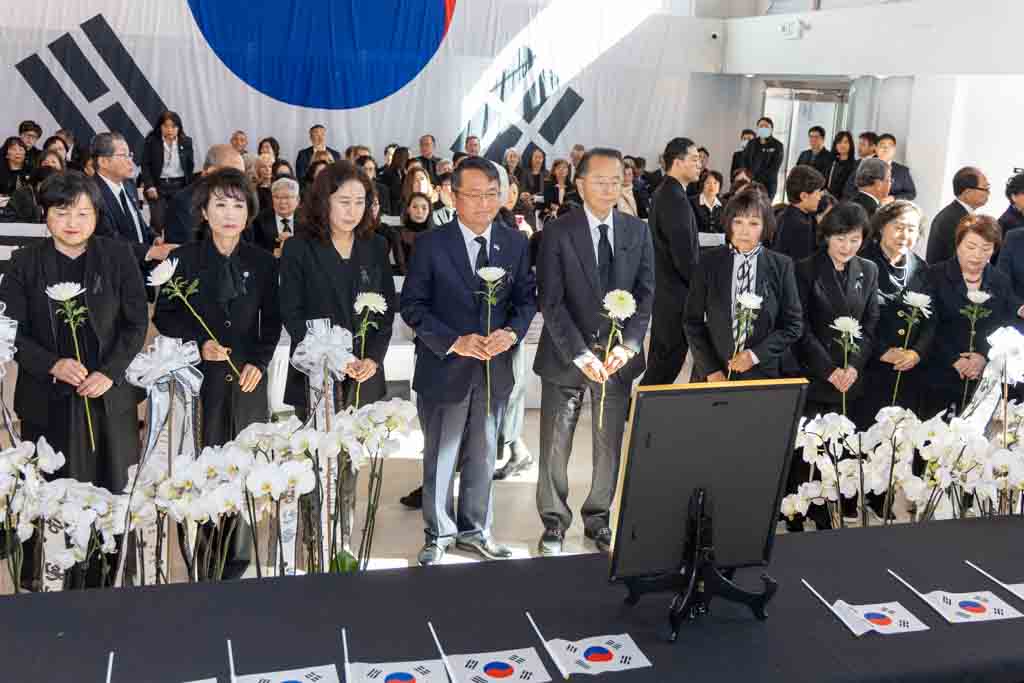
The ceremony included musical tributes, a commemorative video about Lee’s life and a moment for attendees to place flowers before his portrait.
Organizers said Lee’s remains will be returned to South Korea later this year, fulfilling his long-held wish to rest in the homeland he had spent his life defending.
The ceremony included musical tributes, a commemorative video about Lee’s life and a moment for attendees to place flowers before his portrait.
Organizers said Lee’s remains will be returned to South Korea later this year, fulfilling his long-held wish to rest in the homeland he had spent his life defending.
Jeonghyun Choi / choi@baynewslab.com
Copyright © SF Bay News Lab, All Rights Reserved / Advertising Inquiry ad@baynewslab.com